The Screenless Camera Trend Isn’t Going Away
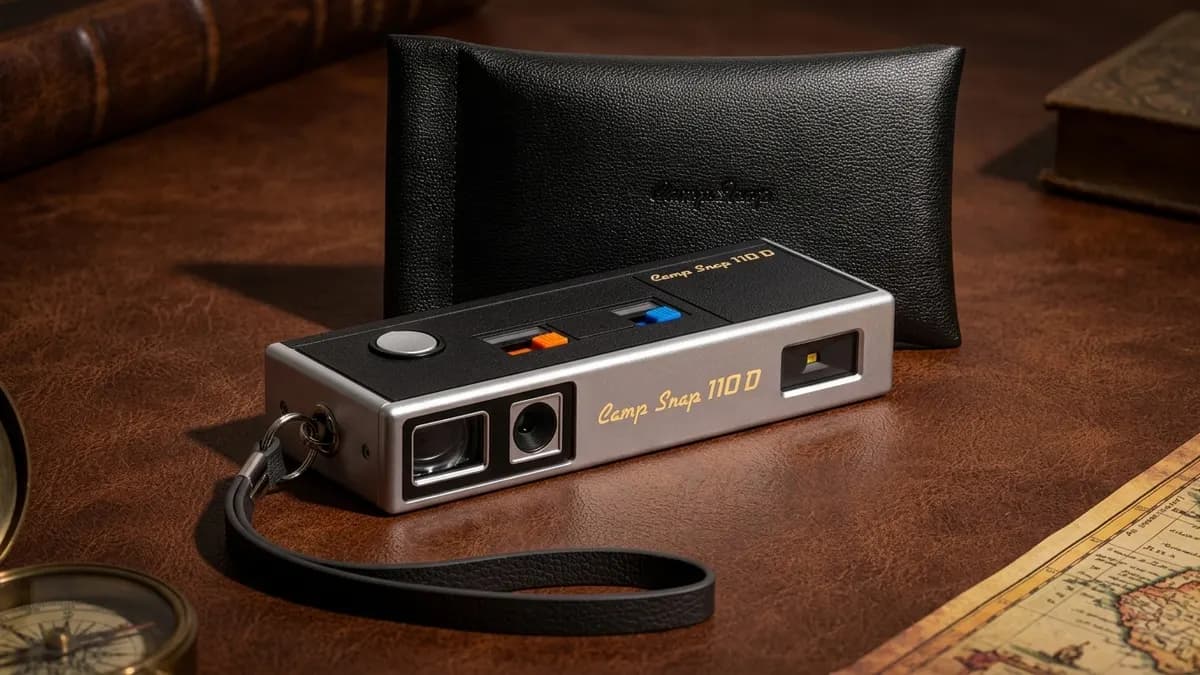
Screenless digital cameras strip photography back to a single decision — point, look through the viewfinder, press the shutter. There’s no screen to check afterward, no instant preview to second-guess, no filter menu to scroll through mid-moment. The retro screenless camera the images in this post are built around is Camp Snap’s 110D, a pocket-sized digital camera shaped like the classic 110 film cameras of the 1970s.
That’s the idea in one sentence. Here’s what it actually feels like to carry one.
Made to Carry, Not to Carry Around
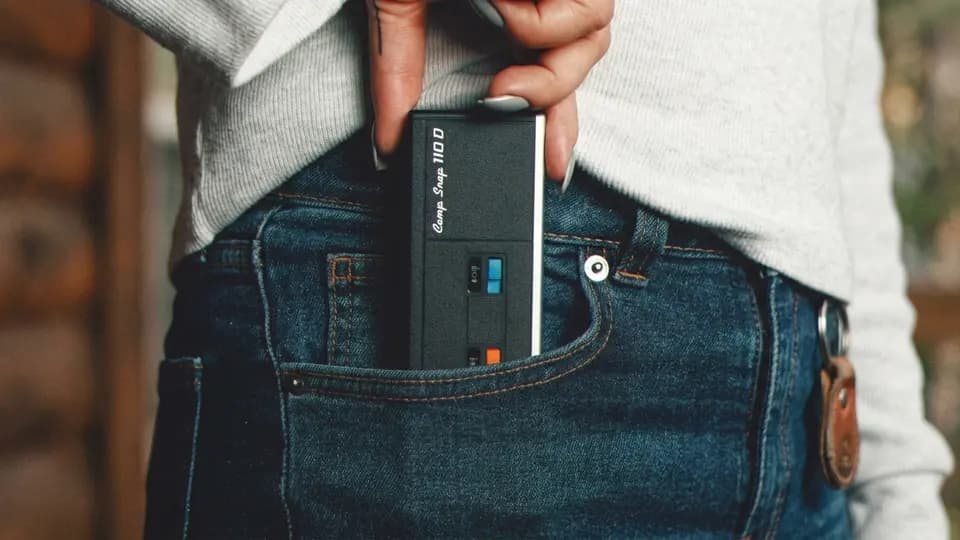
The whole shape of a camera like this is designed around one question: will you actually have it with you? A slim, flat body slides into a jeans pocket the same way a phone does, without the bulk that keeps most cameras sitting in a bag at home. That’s the quiet trade this kind of camera is built on — fewer megapixels, no zoom, no screen, in exchange for something small enough that “I forgot my camera” stops being the reason you didn’t take the photo.
Looking Through It
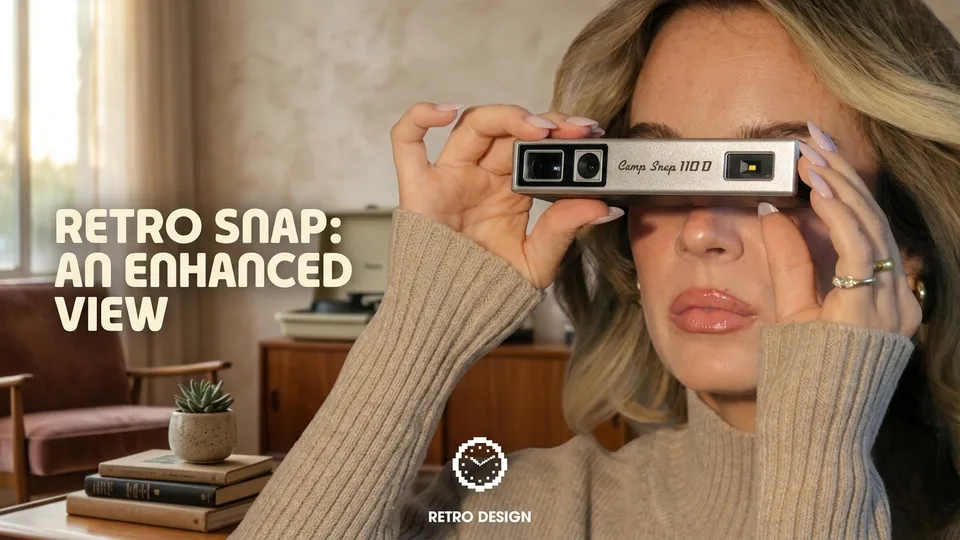
Without a screen, the only way to frame a shot is the optical viewfinder — you hold it up, look through it, and what you see is what you get. There’s no chimping between shots, no reviewing and retaking until it’s perfect. It’s a small shift in behavior that changes how a moment gets captured: less composing, more reacting.
Five Ways to See the Same Moment
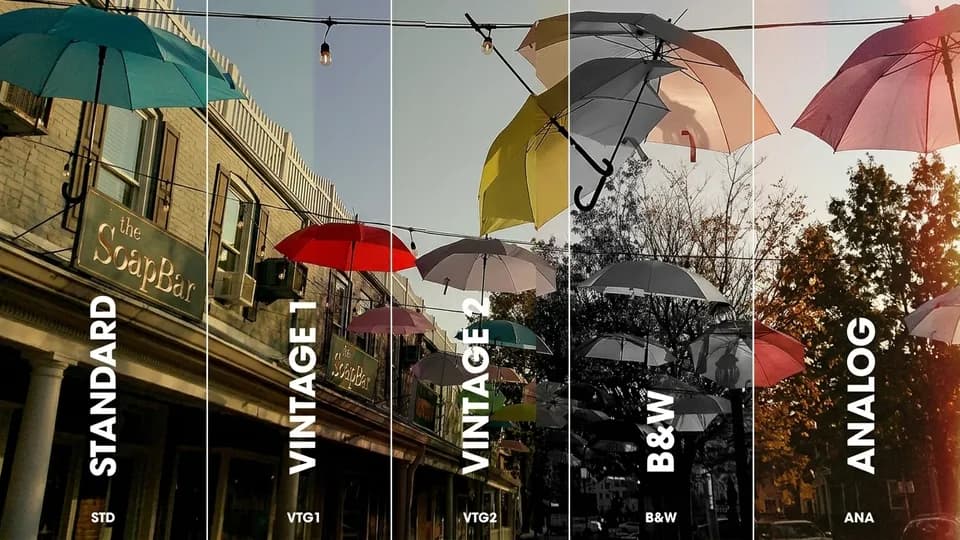
A small switch on the body cycles through five built-in filters — Standard, Vintage 1, Vintage 2, Black & White, and Analog — each one changing the color, grain, and mood of a shot before it’s even taken, not after in an app. The same street scene can go from clean and neutral to warm and sun-faded to stripped down to black and white, all from the same spot, all decided in the second before pressing the shutter.
What Actually Comes Out the Other Side

This is the part that matters most: the actual photos. Arcade lights at night, a payphone prop at a pop-up, friends under a rainbow arch at a festival, a lineup of classic cars parked in the sun — the kind of moments that would otherwise live for a few seconds in a phone’s camera roll before disappearing into a thousand other photos. Shot on something built specifically to slow the process down, they end up feeling less like documentation and more like something worth developing, printing, keeping.
Frequently Asked Questions
It means the camera has no LCD display for previewing or reviewing photos — you frame every shot through an optical viewfinder instead, and only see the results once you transfer the photos to another device.


