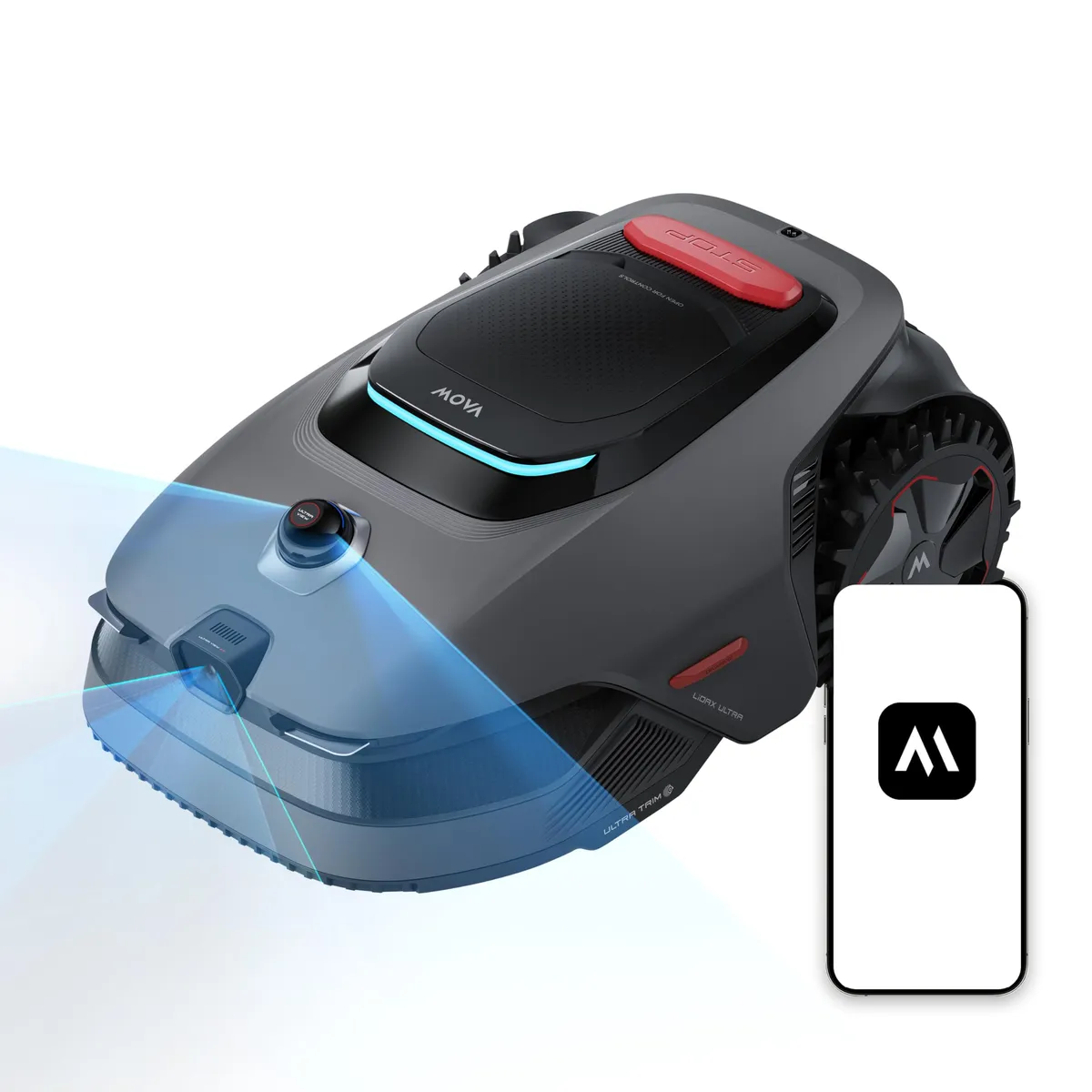
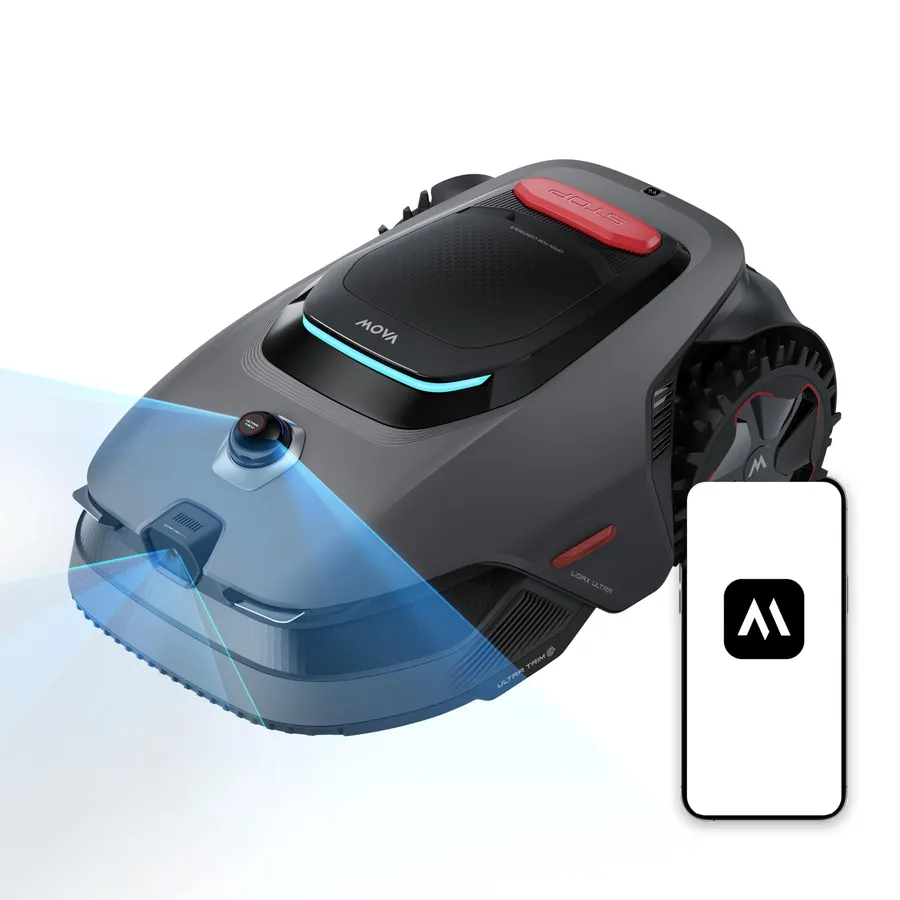
Keeping a large lawn looking neat can take hours of repetitive mowing, especially when the yard has slopes, trees, garden beds, narrow passages, or other obstacles. The MOVA LiDAX Ultra 2000 takes a different approach: instead of relying on traditional boundary wires or an RTK base station, it combines 360° 3D LiDAR with AI vision to map and navigate the lawn.
For homeowners looking for a wireless robot lawn mower without boundary wire installation, this makes the LiDAX Ultra 2000 an interesting option. It is designed for lawns up to 0.5 acre and adds features such as AI obstacle avoidance, edge-focused cutting, automatic charging, multi-zone management, and adjustable cutting height.
The biggest attraction is the wire-free setup. Traditional robotic mowers often require perimeter wires to define where the mower can travel. The LiDAX Ultra 2000 instead uses AI-assisted mapping with 360° 3D LiDAR and AI vision to create a virtual map of the lawn.
That can be especially useful for yards with complicated layouts. According to MOVA, the system can create a 3D map with centimeter-level positioning without requiring an RTK station.
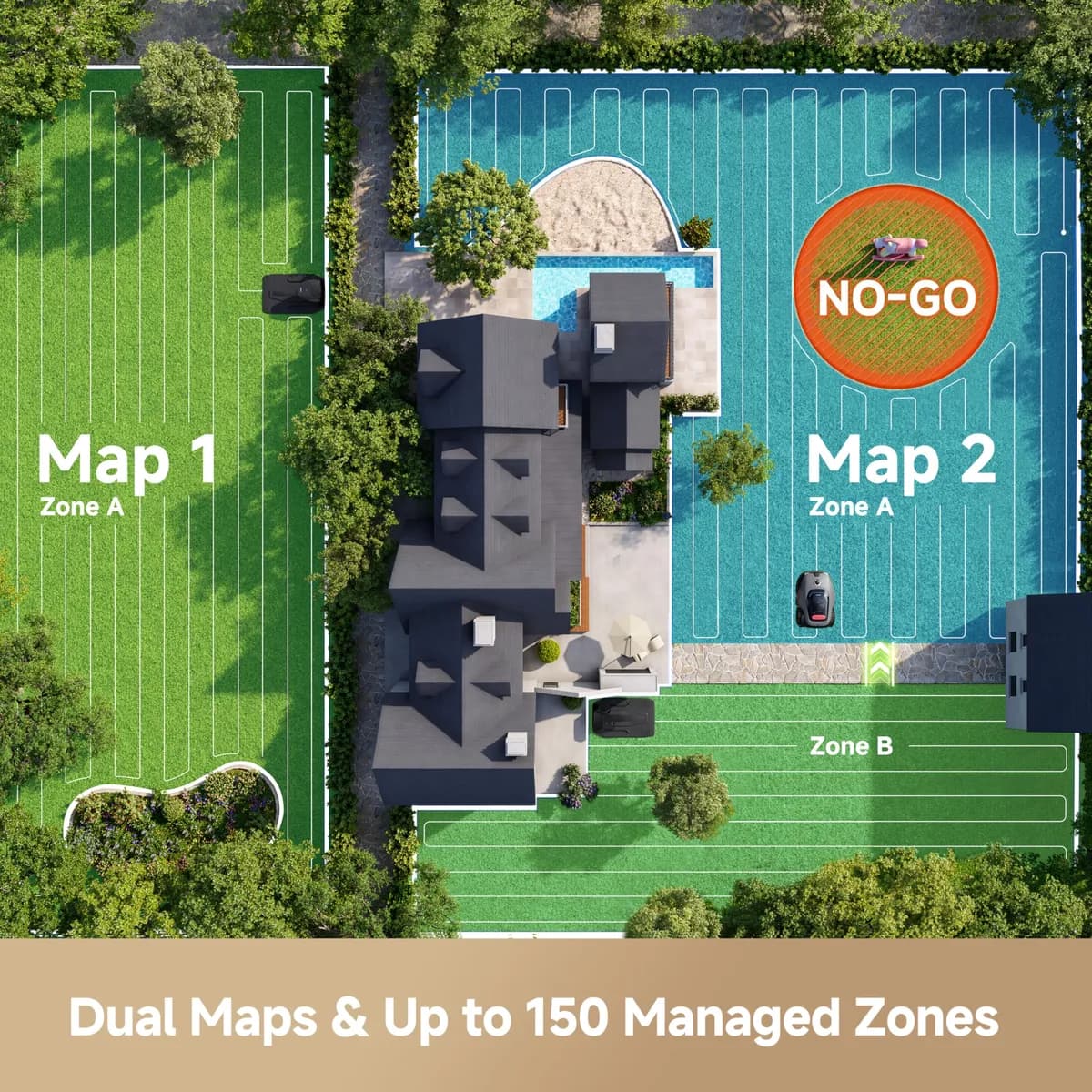
The mower supports up to two independent maps and up to 150 managed mowing zones, giving homeowners more control when a property contains separate lawn areas.
Navigation is one of the most important parts of any autonomous lawn mower.
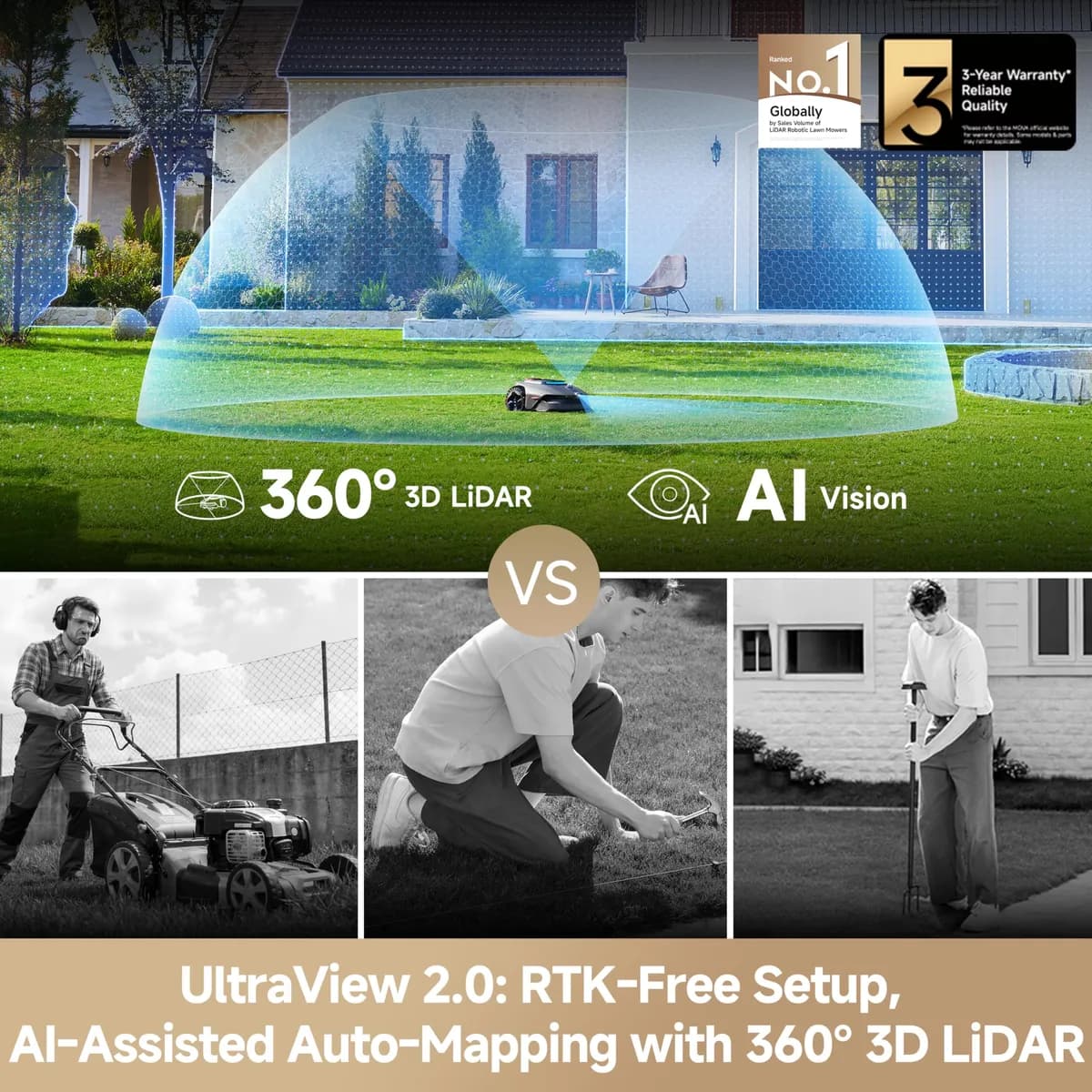
The LiDAX Ultra 2000 combines 3D LiDAR with AI vision to understand its surroundings and plan its route. MOVA says the system can recognize more than 300 types of lawn obstacles.
That means the mower is designed to identify and avoid common objects instead of simply following a predefined boundary.
For homeowners with outdoor furniture, garden items, trees, pathways, or other objects scattered around the lawn, this type of obstacle detection can make autonomous mowing considerably more convenient.
One common problem with robot lawn mowers is the strip of grass left along walls, borders, and raised edges.
The LiDAX Ultra 2000 uses MOVA’s UltraTrim 1.0 system and a movable cutting disc to get closer to lawn edges. MOVA specifies an edge distance of less than 2 inches under its stated conditions.
This can reduce the amount of manual trimming required after the mower finishes its regular mowing cycle.
A completely flat lawn is easy for almost any mower. Real yards are often more complicated.
The LiDAX Ultra 2000 is rated to handle slopes up to 45% and uses rear-wheel drive with off-road wheels for additional traction. It can also handle vertical obstacles up to approximately 1.6 inches.
Actual performance can depend on surface conditions, grass conditions, weather, and the individual lawn layout.

Instead of randomly moving around the lawn, the LiDAX Ultra 2000 uses U-shaped path planning.
When the battery becomes low, the mower can automatically return to its charging station and resume the mowing task afterward.
The LiDAX Ultra 2000 offers electronic cutting-height adjustment from approximately 1.2 inches to 3.9 inches.
This flexibility allows homeowners to choose a suitable cutting height depending on their lawn and preferences.
The mower supports two independent maps and up to 150 managed zones.
This can be useful for properties where front and back lawns are separated or where different sections require different mowing schedules.
The MOVA LiDAX Ultra 2000 is aimed at homeowners who want to reduce manual lawn maintenance without installing traditional boundary wires.
Its combination of 3D LiDAR, AI vision, wire-free mapping, obstacle avoidance, edge-focused cutting, slope capability, multi-zone management, and adjustable cutting height makes it a feature-rich option for lawns up to around half an acre.
If your priority is a wireless robot lawn mower without boundary wire or RTK, the MOVA LiDAX Ultra 2000 stands out because it combines LiDAR-based mapping with AI vision instead of depending on a conventional perimeter-wire setup.
For a lawn of up to 0.5 acre, its combination of automated mapping, obstacle avoidance, edge cutting, slope handling, multi-zone control, and automatic charging makes it an attractive option for homeowners who want more hands-off lawn care.
This article contains affiliate links. If you purchase through the link, we may earn a commission at no additional cost to you.
Frequently Asked Questions
No — it is a wire-free robot lawn mower. Instead of perimeter wires, it uses AI-assisted mapping with 360° 3D LiDAR and AI vision to build a virtual map of the lawn.


